

Por qué el Design Thinking es esencial para el éxito en Agile (Parte 3): el Intelligent Design Studio de Muffins

En la Parte 2, discutimos:
- Diseño Generativo + Automatización
- Automatización No-Code con capacidades de IA + LLMs y SLMs
Y por qué "un enfoque híbrido de herramienta No-Code con capacidades de IA, como las habilitadas por LLMs, puede empoderar a los equipos para generar casos de prueba y automatizar su ejecución dentro de un solo sprint."
Una integración sin fricciones de diseño y ejecución
Integrar el diseño y la ejecución de pruebas es clave para superar los desafíos comunes de Agile, como la falta de alineación entre los diseñadores de casos de prueba y los ingenieros de automatización. Esta integración:
- Reduce el retrabajo y los costos de mantenimiento
- Agiliza la colaboración entre equipos
- Fomenta un enfoque centrado en el cliente, permitiendo diseños de prueba sólidos y automatizables
Para lograr esta integración sin fricciones, necesitamos herramientas y procesos que cierren la brecha entre diseño, desarrollo y testing. Estas herramientas deben permitir:
- Creación y ejecución sencilla de casos de prueba
- Integración con CI/CD
- Seguimiento y reporte automatizado de defectos
- Colaboración fluida entre diseñadores de pruebas, desarrolladores y testers


Pasemos ahora al 'Intelligent Design Studio' de Muffins.
El Intelligent Design Studio de MuffinsMuffins’ Intelligent Design Studio
El diseño es la piedra angular de la automatización. Si bien la automatización puede facilitarse con herramientas y tecnología, los casos de prueba mal diseñados pueden reducir significativamente su valor. El Intelligent Design Studio de Muffins empodera a los diseñadores con herramientas intuitivas para crear diseños de prueba superiores. Estos diseñadores pueden ser desarrolladores, ingenieros de dominio, arquitectos de soluciones o product managers familiarizados con las necesidades de los clientes. Estas herramientas mejorarán su eficiencia y les ayudarán a crear diseños de prueba de mayor calidad. Las tecnologías Low-code y No-code pueden agilizar aún más el proceso de codificación, centrando los esfuerzos en el diseño estratégico y el testing.
Un Intelligent Design Studio potente puede crear y garantizar la conectividad entre diseño, ejecución, CI/CD y gestión de defectos, integrando la automatización sin fricciones. Al simular interacciones humanas con diversas herramientas y plataformas, crea un proceso cohesivo. Este enfoque conectado permite a los equipos lograr calidad de extremo a extremo fácilmente.

a) Cockpit intuitivo, simple y fácil de usar que no requiere conocimientos de programación
Los equipos Agile enfrentan desafíos significativos, tanto desde una perspectiva humana como de procesos. Los ingenieros de calidad se topan con estos problemas en toda clase de organizaciones. Por eso, la solución debe ser intuitiva y fácil de aprender, alineándose con el ritmo más acelerado del desarrollo Agile. Los ingenieros de calidad deben poder diseñar, ejecutar y reportar pruebas de forma eficiente, sin necesidad de amplios conocimientos de programación. Al ofrecer una interfaz amigable que permite la creación de casos de prueba en lenguaje natural, generación automática y parametrización, podemos cerrar la brecha entre diseño y ejecución. Esto empodera a los ingenieros para enfocarse en tareas críticas como el análisis de requisitos y la colaboración con equipos de Desarrollo y DevOps.
Hoy en día, el foco está en generar pruebas a través del uso, la automatización o componentes reutilizables. Crear herramientas intuitivas y fáciles de usar que permitan a los usuarios diseñar pruebas en lenguaje natural, eliminando la necesidad de codificación, se está convirtiendo en una necesidad urgente. Este enfoque No-Code empodera a los usuarios para generar, parametrizar y ejecutar pruebas en múltiples navegadores, mejorando significativamente la eficiencia y la cobertura de pruebas.
b) Algoritmos de self-healing para reducir el costo de mantenimiento en Agile
Cómo mantener los scripts de automatización durante los cambios rápidos en la aplicación es uno de los mayores desafíos que enfrentan los ingenieros de calidad y los equipos de automatización. Agile no se trata solo de construir muchos casos de prueba y automatización nuevos, sino también de mantener el costo de mantenimiento bajo. Por eso, las plataformas están siendo equipadas con algoritmos de self-healing, que se adaptan automáticamente a los cambios en la interfaz de usuario de la aplicación, minimizando así los esfuerzos de mantenimiento. También reducen la necesidad de actualizaciones manuales de scripts y recursos adicionales. Cuando los costos de mantenimiento están bajo control, los equipos pueden enfocarse en desarrollar nuevas funcionalidades y entregar valor a los clientes.
c) Dashboards con insights accionables
Los dashboards empoderan a los managers con visibilidad en tiempo real sobre el proyecto de automatización y les permiten tomar decisiones informadas. Al rastrear métricas como la velocidad y eficiencia del equipo, los managers pueden identificar cuellos de botella, asignar recursos de forma efectiva y asegurarse de que los módulos de alta prioridad reciban la atención necesaria.
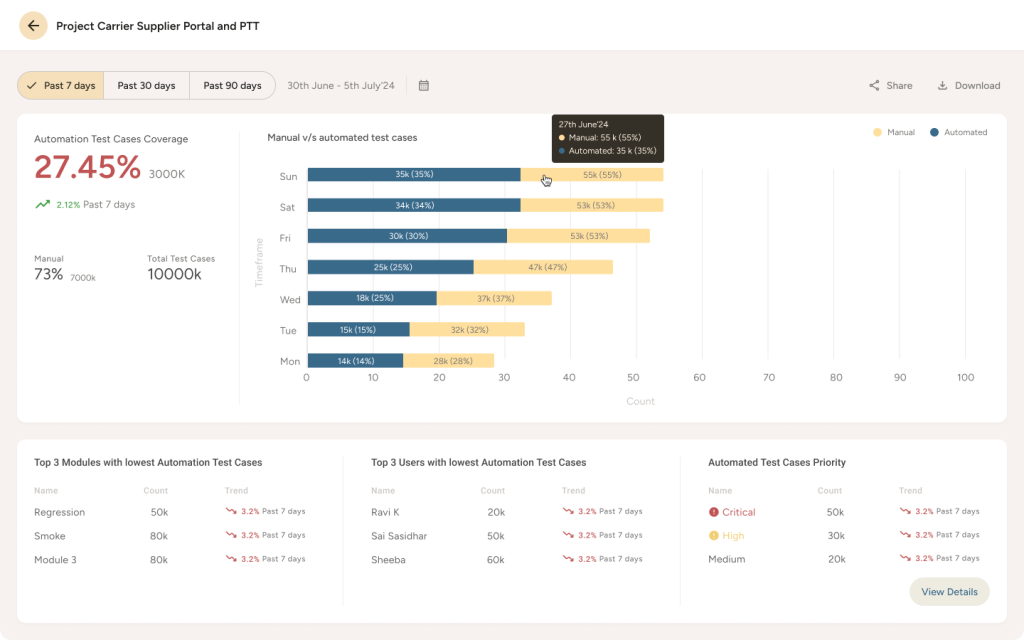
A diferencia de los enfoques tradicionales, que suelen tener productividad limitada, bajas tasas de automatización y mayor dependencia de programadores especializados, Agile opera a mayor velocidad y con un enfoque más fuerte en entregar valor. Una solución bien diseñada puede ayudar a cerrar esta brecha mediante un diseño eficiente de casos de prueba, mayor enfoque en los módulos de alta prioridad, automatización y mantenimiento.
El éxito en la automatización consiste en lograr el equilibrio adecuado entre la cobertura de pruebas y la asignación de recursos. Priorizar los escenarios de mayor impacto y automatizarlos de forma eficiente es muy importante. Las herramientas que facilitan el diseño intuitivo y la automatización, junto con capacidades de self-healing, pueden mejorar significativamente la productividad y reducir los costos de mantenimiento.
Para concluir
El diseño se está convirtiendo en la piedra angular del éxito en Agile. Al integrar herramientas Low-code/No-code con un lenguaje de diseño compartido, los equipos pueden agilizar los procesos de desarrollo, reducir el tiempo de lanzamiento al mercado, mejorar la calidad del producto y ofrecer experiencias de usuario excepcionales.
Nuestro 'Intelligent Design Studio' y las soluciones de Diseño Generativo + Automatización pueden ayudarte a alcanzar una eficiencia e innovación sin precedentes. Agenda una demo o solicita una consultoría para saber más.
Frequently asked questions
Cierra la brecha entre el diseño y la ejecución de pruebas al permitir una integración sin fricciones y reducir la falta de alineación entre diseñadores e ingenieros de automatización. Esto significa menos retrabajo, colaboración más ágil y un enfoque centrado en el cliente con diseños de alta calidad y automatizables.
Cuatro capacidades destacadas:
- Una interfaz No-Code para crear pruebas en lenguaje natural
- Algoritmos de self-healing que se adaptan automáticamente a los cambios de UI
- Dashboards en tiempo real con visibilidad sobre velocidad y cobertura
- Integración de extremo a extremo que conecta diseño, ejecución, CI/CD y seguimiento de defectos
Las herramientas tradicionales requieren experiencia en codificación, tienen altos costos de mantenimiento y tratan el diseño de forma separada a la ejecución. Muffins integra diseño y ejecución en una sola plataforma, hace que la creación de pruebas sea accesible para perfiles no técnicos y usa IA para gestionar el trabajo repetitivo — para que los testers humanos puedan enfocarse en el juicio, los casos límite y la colaboración.
Los algoritmos de self-healing detectan y se adaptan automáticamente a los cambios en la aplicación, minimizando la necesidad de actualizaciones manuales de scripts. Esto reduce el tiempo que los equipos dedican al mantenimiento y los libera para enfocarse en trabajo de diseño y testing de mayor valor.
Cualquier persona involucrada en calidad: ingenieros de QA, desarrolladores, product managers, expertos de dominio y analistas de negocio. La interfaz No-Code está construida específicamente para que las personas más cercanas a las necesidades del usuario puedan contribuir directamente al diseño de pruebas.
Subscribe today.
Thank you!
Integración sin fricciones de diseño y ejecución
El Intelligent Design Studio de Muffins
More related blogs
Perspectiva de Muffins: Por qué el Design Thinking es esencial para el éxito de Agile (Parte 1)
- November 29, 2024
Más allá de Selenium y Playwright: Muffins ofrece simplicidad sin código para la automatización de pruebas
- June 2, 2025

Verificación Personalizada de Documentos y Texto para Fabricantes establecidos en México de Alto Nivel
- February 3, 2025